-
中文名稱:ACKR4兔多克隆抗體
-
貨號:CSB-PA001411
-
規格:¥1090
-
圖片:
-
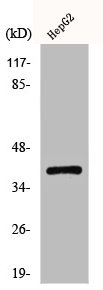 Western Blot analysis of HepG2 cells using CCRL1 Polyclonal Antibody
-
-
其他:
產品詳情
-
Uniprot No.:
-
基因名:
-
別名:ACKR4; CCBP2; CCR11; CCRL1; VSHK1; Atypical chemokine receptor 4; C-C chemokine receptor type 11; C-C CKR-11; CC-CKR-11; CCR-11; CC chemokine receptor-like 1; CCX CKR
-
宿主:Rabbit
-
反應種屬:Human,Mouse
-
免疫原:Synthesized peptide derived from the C-terminal region of Human CCRL1.
-
免疫原種屬:Homo sapiens (Human)
-
標記方式:Non-conjugated
-
抗體亞型:IgG
-
純化方式:The antibody was affinity-purified from rabbit antiserum by affinity-chromatography using epitope-specific immunogen.
-
濃度:It differs from different batches. Please contact us to confirm it.
-
保存緩沖液:Liquid in PBS containing 50% glycerol, 0.5% BSA and 0.02% sodium azide.
-
產品提供形式:Liquid
-
應用范圍:WB, IF, ELISA
-
推薦稀釋比:
Application Recommended Dilution WB 1:500-1:2000 IF 1:200-1:1000 ELISA 1:40000 -
Protocols:
-
儲存條件:Upon receipt, store at -20°C or -80°C. Avoid repeated freeze.
-
貨期:Basically, we can dispatch the products out in 1-3 working days after receiving your orders. Delivery time maybe differs from different purchasing way or location, please kindly consult your local distributors for specific delivery time.
-
用途:For Research Use Only. Not for use in diagnostic or therapeutic procedures.
引用文獻
產品評價

相關產品
靶點詳情
-
功能:Atypical chemokine receptor that controls chemokine levels and localization via high-affinity chemokine binding that is uncoupled from classic ligand-driven signal transduction cascades, resulting instead in chemokine sequestration, degradation, or transcytosis. Also known as interceptor (internalizing receptor) or chemokine-scavenging receptor or chemokine decoy receptor. Acts as a receptor for chemokines CCL2, CCL8, CCL13, CCL19, CCL21 and CCL25. Chemokine-binding does not activate G-protein-mediated signal transduction but instead induces beta-arrestin recruitment, leading to ligand internalization. Plays an important role in controlling the migration of immune and cancer cells that express chemokine receptors CCR7 and CCR9, by reducing the availability of CCL19, CCL21, and CCL25 through internalization. Negatively regulates CXCR3-induced chemotaxis. Regulates T-cell development in the thymus.
-
基因功能參考文獻:
- Results of this study show that HEK 293 cells express an endogenous CCRL1 gene only at mRNA level. These data therefore represent the important implications for the use of HEK 293 cells as a host cell system for the study of CCX-CKR. PMID: 26699909
- we found that CCX-CKR expression in vitro could modulate cellular migration and invasion abilities, potentially via the regulation of other chemotactic factors/receptors. PMID: 24338720
- Effect of genetic variants in two chemokine decoy receptor genes, DARC and CCBP2, on metastatic potential of breast cancer. PMID: 24260134
- co-expression of DARC, D6, and CCX-CKR significantly associated with higher survival in gastric cancer PMID: 23462454
- Data suggest that co-expression of CCX-CKR and CXCR3 (chemokine receptor type 3) in T-lymphocytes results in protein multimerization and prevents CXCR3-mediated chemotaxis; this represents a novel mechanism of regulation of immune cell migration. PMID: 23121557
- Results suggest that chemokine binding to CCX-CKR recruits Gi proteins and beta-arrestin (beta-arr) with high affinity. PMID: 23341447
- Characterization of mouse CCX-CKR, a receptor for the lymphocyte-attracting chemokines TECK/mCCL25, SLC/mCCL21 and MIP-3beta/mCCL19: comparison to human CCX-CKR. PMID: 11981810
- Scavenges extracellular chemokines in vivo to modify responses through CCR7. PMID: 16791897
- Down regulation of CCX-CKR is associated with breast cancer. PMID: 19383822
顯示更多
收起更多
-
亞細胞定位:Early endosome. Recycling endosome. Cell membrane; Multi-pass membrane protein. Note=Predominantly localizes to endocytic vesicles, and upon stimulation by the ligand is internalized via caveolae. Once internalized, the ligand dissociates from the receptor, and is targeted to degradation while the receptor is recycled back to the cell membrane.
-
蛋白家族:G-protein coupled receptor 1 family, Atypical chemokine receptor subfamily
-
組織特異性:Predominantly expressed in heart. Lower expression in lung, pancreas, spleen, colon, skeletal muscle and small intestine.
-
數據庫鏈接:
Most popular with customers
-

-
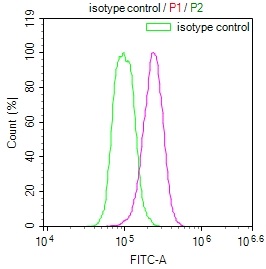
YWHAB Recombinant Monoclonal Antibody
Applications: ELISA, WB, IHC, IF, FC
Species Reactivity: Human, Mouse, Rat
-
Phospho-YAP1 (S127) Recombinant Monoclonal Antibody
Applications: ELISA, WB, IHC
Species Reactivity: Human
-
-
-
-
-