Recombinant Human Long-chain-fatty-acid--CoA ligase 5 (ACSL5), partial
In Stock-
中文名稱:Recombinant Human Long-chain-fatty-acid--CoA ligase 5(ACSL5),partial
-
品名簡稱:Recombinant Human ACSL5 protein, partial
-
貨號:CSB-EP891734HU
-
說明書:
-
規格:¥1344
-
圖片:
-
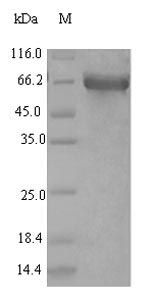 (Tris-Glycine gel) Discontinuous SDS-PAGE (reduced) with 5% enrichment gel and 15% separation gel.
-
-
其他:
產品詳情
-
純度:Greater than 90% as determined by SDS-PAGE.
-
基因名:
-
Uniprot No.:
-
別名:ACSL5; ACS5; FACL5; UNQ633/PRO1250; Long-chain-fatty-acid--CoA ligase 5; EC 6.2.1.3; Arachidonate--CoA ligase; EC 6.2.1.15; Long-chain acyl-CoA synthetase 5; LACS 5
-
種屬:Homo sapiens (Human)
-
蛋白長度:Cytoplasmic Domain
-
來源:E.coli
-
分子量:76.4kDa
-
表達區域:33-683aa
-
氨基酸序列TRPQPVLPLLDLNNQSVGIEGGARKGVSQKNNDLTSCCFSDAKTMYEVFQRGLAVSDNGPCLGYRKPNQPYRWLSYKQVSDRAEYLGSCLLHKGYKSSPDQFVGIFAQNRPEWIISELACYTYSMVAVPLYDTLGPEAIVHIVNKADIAMVICDTPQKALVLIGNVEKGFTPSLKVIILMDPFDDDLKQRGEKSGIEILSLYDAENLGKEHFRKPVPPSPEDLSVICFTSGTTGDPKGAMITHQNIVSNAAAFLKCVEHAYEPTPDDVAISYLPLAHMFERIVQAVVYSCGARVGFFQGDIRLLADDMKTLKPTLFPAVPRLLNRIYDKVQNEAKTPLKKFLLKLAVSSKFKELQKGIIRHDSFWDKLIFAKIQDSLGGRVRVIVTGAAPMSTSVMTFFRAAMGCQVYEAYGQTECTGGCTFTLPGDWTSGHVGVPLACNYVKLEDVADMNYFTVNNEGEVCIKGTNVFKGYLKDPEKTQEALDSDGWLHTGDIGRWLPNGTLKIIDRKKNIFKLAQGEYIAPEKIENIYNRSQPVLQIFVHGESLRSSLVGVVVPDTDVLPSFAAKLGVKGSFEELCQNQVVREAILEDLQKIGKESGLKTFEQVKAIFLHPEPFSIENGLLTPTLKAKRGELSKYFRTQIDSLYEHIQD
Note: The complete sequence may include tag sequence, target protein sequence, linker sequence and extra sequence that is translated with the protein sequence for the purpose(s) of secretion, stability, solubility, etc.
If the exact amino acid sequence of this recombinant protein is critical to your application, please explicitly request the full and complete sequence of this protein before ordering. -
蛋白標簽:N-terminal 6xHis-tagged
-
產品提供形式:Liquid or Lyophilized powder
Note: We will preferentially ship the format that we have in stock, however, if you have any special requirement for the format, please remark your requirement when placing the order, we will prepare according to your demand. -
緩沖液:If the delivery form is liquid, the default storage buffer is Tris/PBS-based buffer, 5%-50% glycerol.
Note: If you have any special requirement for the glycerol content, please remark when you place the order.
If the delivery form is lyophilized powder, the buffer before lyophilization is Tris/PBS-based buffer, 6% Trehalose. -
儲存條件:Store at -20°C/-80°C upon receipt, aliquoting is necessary for mutiple use. Avoid repeated freeze-thaw cycles.
-
保質期:The shelf life is related to many factors, storage state, buffer ingredients, storage temperature and the stability of the protein itself.
Generally, the shelf life of liquid form is 6 months at -20°C/-80°C. The shelf life of lyophilized form is 12 months at -20°C/-80°C. -
貨期:3-7 business days
-
注意事項:Repeated freezing and thawing is not recommended. Store working aliquots at 4°C for up to one week.
-
Datasheet & COA:Please contact us to get it.
產品評價

相關產品
靶點詳情
-
功能:Catalyzes the conversion of long-chain fatty acids to their active form acyl-CoAs for both synthesis of cellular lipids, and degradation via beta-oxidation. ACSL5 may activate fatty acids from exogenous sources for the synthesis of triacylglycerol destined for intracellular storage. Utilizes a wide range of saturated fatty acids with a preference for C16-C18 unsaturated fatty acids. It was suggested that it may also stimulate fatty acid oxidation. At the villus tip of the crypt-villus axis of the small intestine may sensitize epithelial cells to apoptosis specifically triggered by the death ligand TRAIL. May have a role in the survival of glioma cells.
-
基因功能參考文獻:
- our study has demonstrated that ACS5 expression was increased in colorectal cancer (CRC) cells and CRC tissues and its upregulation closely correlated to poor tumor differentiation and excess muscular layer in patients with CRC PMID: 28808653
- These results suggest that ACSL1, ACSL4 and ACSL5 expression is regulated by ER signaling pathways and ACSL5 is a potential novel biomarker for predicting prognosis of breast cancer patients. PMID: 28498416
- Functional variant (rs2256368:A>G) affecting ACSL5 exon 20 skipping was identified as a causal factor linked to the migraine-associated rs12355831:A>G, suggesting that the activation of long-chain fatty acids by the spliced ACSL5-Delta20 molecules is involved in migraine pathology. PMID: 27189022
- colorectal adenocarcinomas with low (n=41; group 1) or high (n=31; group 2) ACSL5 levels were identified. In a one-year follow-up, tumour recurrence was significantly increased in group 1. PMID: 28153554
- ACSL5 mediates antiproliferative activities via Wnt2B palmitoylation with diminished Wnt activity. The molecular pathway is probably relevant for intestinal homeostasis, overwhelmed by other pathways in carcinogenesis. PMID: 25356045
- Uncoupling of ACSL5 and mitochondrial mortalin by mutated TP53 could be important in colorectal carcinogenesis. PMID: 24770931
- Down-regulation of ACSL5 is associated with colorectal cancer. PMID: 24222123
- Levels of acyl-coenzyme A synthetase 5 in urothelial cells and corresponding neoplasias reflect cellular differentiation. PMID: 23348389
- High ACSL5 transcript levels associate with systemic lupus erythematosus and apoptosis in Jurkat T lymphocytes and peripheral blood cells PMID: 22163040
- The data strongly indicate that human but not rat acyl-CoA synthetase 5 is sensitive to triacsin C and does not compensate for other triacsin C-sensitive ACSL isoforms. PMID: 22171129
- Increased ACSL5 is associated with Fatty Liver. PMID: 20470896
- expression of ACS5 in the gastric body and the small intestine with metaplasia or heterotopia PMID: 15736044
- ACS5 is a very suitable marker molecule for the detection of villus atrophy in the small intestine. PMID: 15809837
- SREBP-1c-mediated insulin regulation of acyl-CoA synthestase 5 expression indicate that ACS-5 is involved in the anabolic fate of fatty acids. PMID: 16198472
- Existence of a link between ACSL5 genotype and diet responsiveness. PMID: 17495181
- Suggest an ACSL5-dependent regulatory mechanism that contributes to the cellular renewal along the crypt-villus axis in human small intestine. PMID: 17681178
- Oncostatin M directly lowers the plasma triglycerides in hyperlipidemia by stimulating the transcription of ACSL3/5 in the liver. PMID: 17761945
- Expression of ACSL5 in human epidermis is reported. PMID: 18228202
- These results indicate that ACSL5 is a critical factor for survival of glioma cells under acidic tumor microenvironment. PMID: 18806831
- These results reveal a mechanism for elevated transcription of ACSL5 in skeletal muscle of carriers of the rs2419621(T) allele, associated with more rapid diet-induced weight loss. PMID: 19218499
顯示更多
收起更多
-
亞細胞定位:Mitochondrion. Endoplasmic reticulum. Mitochondrion outer membrane; Single-pass type III membrane protein. Endoplasmic reticulum membrane; Single-pass type III membrane protein. Cell membrane.
-
蛋白家族:ATP-dependent AMP-binding enzyme family
-
數據庫鏈接:
Most popular with customers
-

Recombinant Human Myeloid cell surface antigen CD33 (CD33), partial (Active)
Express system: Mammalian cell
Species: Homo sapiens (Human)
-
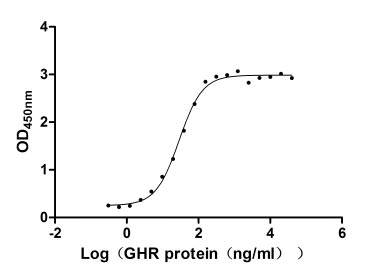
Recombinant Human Growth hormone receptor (GHR), partial (Active)
Express system: Mammalian cell
Species: Homo sapiens (Human)
-
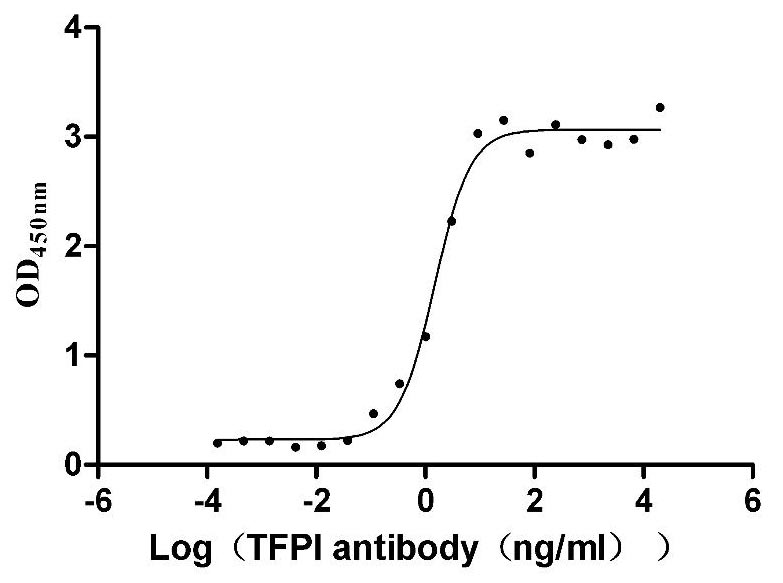
Recombinant Human Tissue factor pathway inhibitor (TFPI), partial (Active)
Express system: Mammalian cell
Species: Homo sapiens (Human)
-
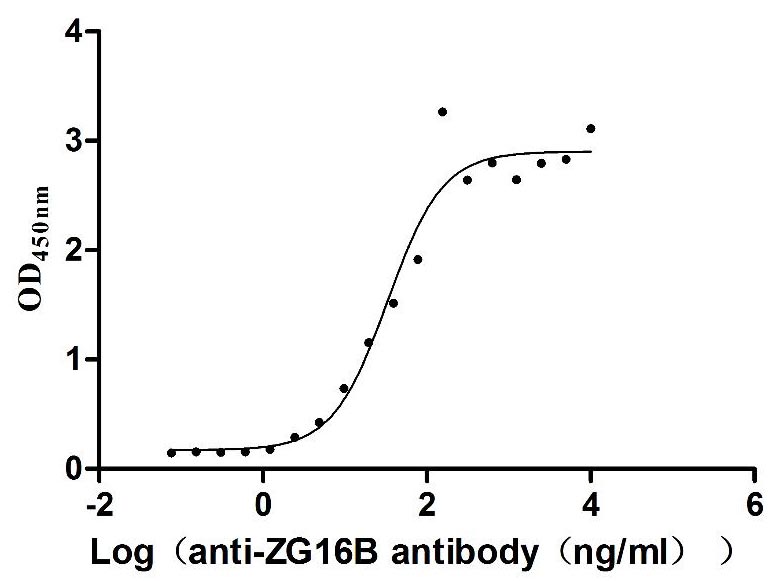
Recombinant Human Pancreatic adenocarcinoma up-regulated factor (ZG16B) (Active)
Express system: Mammalian cell
Species: Homo sapiens (Human)
-
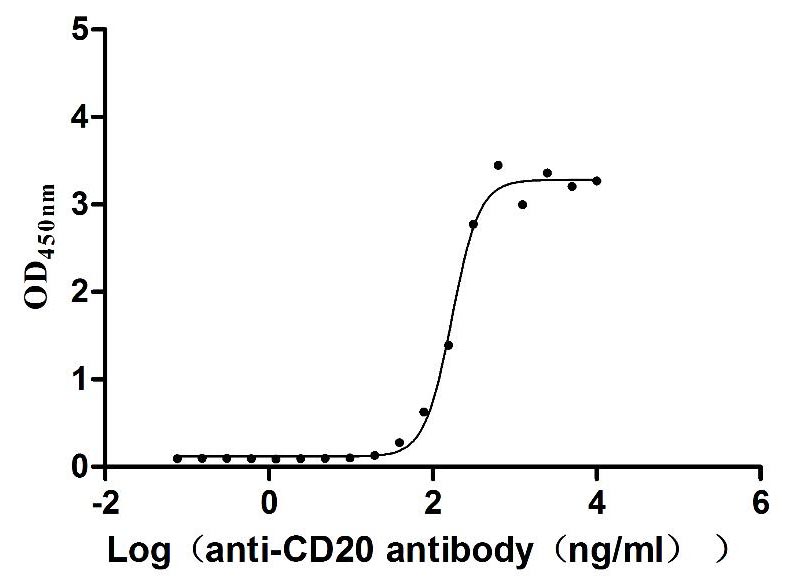
Recombinant Dog B-lymphocyte antigen CD20 (MS4A1)-VLPs (Active)
Express system: Mammalian cell
Species: Canis lupus familiaris (Dog) (Canis familiaris)
-
-AC5.jpg)
Recombinant Human Claudin-6 (CLDN6)-VLPs (Active)
Express system: Mammalian cell
Species: Homo sapiens (Human)
-
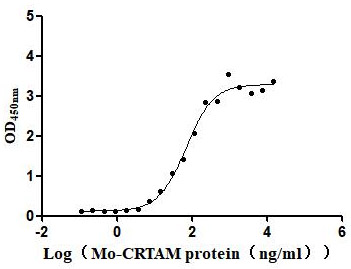
Recombinant Mouse Cell adhesion molecule 1 (Cadm1), partial (Active)
Express system: Mammalian cell
Species: Mus musculus (Mouse)
-
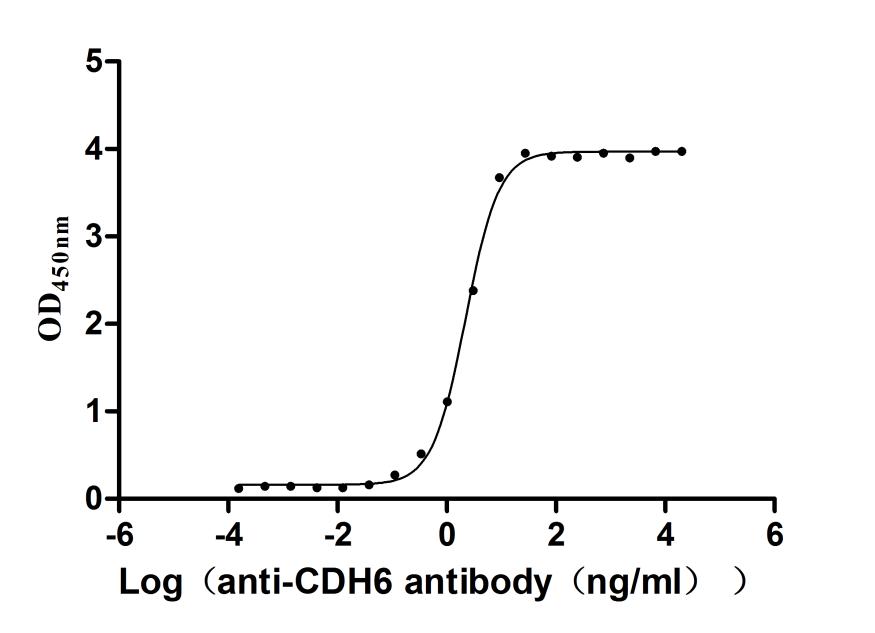
Recombinant Macaca fascicularis Cadherin 6(CDH6),partial (Active)
Express system: Mammalian cell
Species: Macaca fascicularis (Crab-eating macaque) (Cynomolgus monkey)