Recombinant Mouse Protein arginine N-methyltransferase 1 (Prmt1)
-
中文名稱:小鼠Prmt1重組蛋白
-
貨號:CSB-YP878062MO
-
規(guī)格:
-
來源:Yeast
-
其他:
-
中文名稱:小鼠Prmt1重組蛋白
-
貨號:CSB-EP878062MO
-
規(guī)格:
-
來源:E.coli
-
其他:
-
中文名稱:小鼠Prmt1重組蛋白
-
貨號:CSB-EP878062MO-B
-
規(guī)格:
-
來源:E.coli
-
共軛:Avi-tag Biotinylated
E. coli biotin ligase (BirA) is highly specific in covalently attaching biotin to the 15 amino acid AviTag peptide. This recombinant protein was biotinylated in vivo by AviTag-BirA technology, which method is BriA catalyzes amide linkage between the biotin and the specific lysine of the AviTag.
-
其他:
-
中文名稱:小鼠Prmt1重組蛋白
-
貨號:CSB-BP878062MO
-
規(guī)格:
-
來源:Baculovirus
-
其他:
-
中文名稱:小鼠Prmt1重組蛋白
-
貨號:CSB-MP878062MO
-
規(guī)格:
-
來源:Mammalian cell
-
其他:
產品詳情
-
純度:>85% (SDS-PAGE)
-
基因名:
-
Uniprot No.:
-
別名:Prmt1; Hrmt1l2; Mrmt1Protein arginine N-methyltransferase 1; EC 2.1.1.319; Histone-arginine N-methyltransferase PRMT1
-
種屬:Mus musculus (Mouse)
-
蛋白長度:full length protein
-
表達區(qū)域:1-371
-
氨基酸序列MAAAEAANCI MENFVATLAN GMSLQPPLEE VSCGQAESSE KPNAEDMTSK DYYFDSYAHF GIHEEMLKDE VRTLTYRNSM FHNRHLFKDK VVLDVGSGTG ILCMFAAKAG ARKVIGIECS SISDYAVKIV KANKLDHVVT IIKGKVEEVE LPVEKVDIII SEWMGYCLFY ESMLNTVLHA RDKWLAPDGL IFPDRATLYV TAIEDRQYKD YKIHWWENVY GFDMSCIKDV AIKEPLVDVV DPKQLVTNAC LIKEVDIYTV KVEDLTFTSP FCLQVKRNDY VHALVAYFNI EFTRCHKRTG FSTSPESPYT HWKQTVFYME DYLTVKTGEE IFGTIGMRPN AKNNRDLDFT IDLDFKGQLC ELSCSTDYRM R
-
蛋白標簽:Tag?type?will?be?determined?during?the?manufacturing?process.
The tag type will be determined during production process. If you have specified tag type, please tell us and we will develop the specified tag preferentially. -
產品提供形式:Lyophilized powder
Note: We will preferentially ship the format that we have in stock, however, if you have any special requirement for the format, please remark your requirement when placing the order, we will prepare according to your demand. -
復溶:We recommend that this vial be briefly centrifuged prior to opening to bring the contents to the bottom. Please reconstitute protein in deionized sterile water to a concentration of 0.1-1.0 mg/mL.We recommend to add 5-50% of glycerol (final concentration) and aliquot for long-term storage at -20℃/-80℃. Our default final concentration of glycerol is 50%. Customers could use it as reference.
-
儲存條件:Store at -20°C/-80°C upon receipt, aliquoting is necessary for mutiple use. Avoid repeated freeze-thaw cycles.
-
保質期:The shelf life is related to many factors, storage state, buffer ingredients, storage temperature and the stability of the protein itself.
Generally, the shelf life of liquid form is 6 months at -20°C/-80°C. The shelf life of lyophilized form is 12 months at -20°C/-80°C. -
貨期:Delivery time may differ from different purchasing way or location, please kindly consult your local distributors for specific delivery time.Note: All of our proteins are default shipped with normal blue ice packs, if you request to ship with dry ice, please communicate with us in advance and extra fees will be charged.
-
注意事項:Repeated freezing and thawing is not recommended. Store working aliquots at 4°C for up to one week.
-
Datasheet :Please contact us to get it.
產品評價

靶點詳情
-
功能:Arginine methyltransferase that methylates (mono and asymmetric dimethylation) the guanidino nitrogens of arginyl residues present in proteins such as ESR1, histone H2, H3 and H4, ILF3, HNRNPA1, HNRNPD, NFATC2IP, SUPT5H, TAF15, EWS, HABP4 and SERBP1. Constitutes the main enzyme that mediates monomethylation and asymmetric dimethylation of histone H4 'Arg-4' (H4R3me1 and H4R3me2a, respectively), a specific tag for epigenetic transcriptional activation. Methylates H4R3 in genes involved in glioblastomagenesis in a CHTOP- and/or TET1-dependent manner. May be involved in the regulation of TAF15 transcriptional activity, act as an activator of estrogen receptor (ER)-mediated transactivation, play a key role in neurite outgrowth and act as a negative regulator of megakaryocytic differentiation, by modulating p38 MAPK pathway. Methylates RBM15, promoting ubiquitination and degradation of RBM15. Methylates CHTOP and this methylation is critical for its 5-hydroxymethylcytosine (5hmC)-binding activity. Plays a role in regulating alternative splicing in the heart.
-
基因功能參考文獻:
- PRMT activity is selectively augmented during the initial activation of exercise-induced skeletal muscle remodeling in vivo. PMID: 29112628
- the present study increases our understanding of PRMT1, -4, and -5 biology during the plasticity of skeletal muscle development. Our results provide evidence for a role of PRMT1, via a mitochondrially mediated mechanism, in driving the muscle differentiation program. PMID: 29208765
- lipotoxicity-induced PRMT1 expression promotes endoplasmic reticulum stress-mediated mesangial cell apoptosis. PMID: 28671608
- PRMT1 is an arginine methyltransferase involved in a variety of cell functions. Here the authors delete PRMT1 specifically in mature B cells to show the importance of arginine methylation for B cell proliferation, differentiation and survival, and thereby for humoral immunity. PMID: 29026071
- Collectively, this study firstly demonstrated that PRMT1 exert podocyte-injury effects in mouse glomerulus through Ang /ERK pathway, which reveals a potential therapeutic target for DN. PMID: 29129692
- Low Prmt1 expression is associated with osteosarcoma. PMID: 28655788
- Collectively, the authors propose that Prmt1-dependent facilitation of KCNQ-phosphatidylinositol-4,5-bisphosphate interaction underlies the positive regulation of KCNQ activity by arginine methylation, which may serve as a key target for prevention of neuronal hyperexcitability and seizures. PMID: 27466704
- Data, including data from studies in cells from knockout mice, suggest that Prmt1 activity was necessary for c-Myc binding to acetyltransferase p300 in myeloid cells; Prmt1 inhibition decreases p300 recruitment to c-Myc target promoters and increased Hdac1 recruitment. [Prmt1, protein arginine N-methyltransferase 1; c-Myc = Proto-Oncogene Proteins c-myc; Hdac1 = histone deacetylase 1] PMID: 28652407
- PRMT1-dependent regulation of macrophage PPARgamma expression contributes to the infection susceptibility in PRMT1 knock-out mice PMID: 28330868
- These findings suggest that arginine methylation by PRMT1 regulates muscle stem cell fate through the Eya1/Six1/MyoD axis. PMID: 27849571
- PRMT1 is necessary for lymphocyte functions in vivo. PMID: 27013173
- The Protein arginine methyltransferase 1 (PRMT1) is involved in multiple cellular functions including proliferation and differentiation and PRMT1 is important for embryonic vascular formation. PMID: 28003433
- PRMT1 is required for CNS development, especially for oligodendrocyte maturation processes PMID: 26637354
- Pharmacological inhibition of KDM4C/PRMT1 suppresses transcription and transformation ability of MLL fusions PMID: 26766589
- PRMT1 knockdown reduced H4R3me2a expression to alter potential H3K9/K14 acetylation by acetyltransferases, and to eventually result in diminished acH3K9/K14 modification in nucleus accumbens. PRMT1 is the main enzyme responsible for this modification. PMID: 26377474
- Study provides evidence for loss of PRMT1 function as a consequence of cytoplasmic accumulation of FUS in the pathogenesis of amyotrophic lateral sclerosis, including changes in the histone code regulating gene transcription. PMID: 25274782
- In vivo, levels of lipogenic proteins, inflammatory molecules, PGC-1alpha, and PRMT1 were increased in the livers of HFD mice compared with those fed a chow diet, and were ameliorated in HFD Txnip(-/-) mice. PMID: 25003952
- GSK3- and PRMT-1-dependent modifications of desmoplakin control desmoplakin-cytoskeleton dynamics. PMID: 25733715
- PRMT1 concentrates in cytoplasmic bodies, which respond to DNA injury in the cell nucleus PMID: 24998928
- PRMT1-mediated arginine methylation could be implicated in the nucleus-cytoplasmic shuttling of FUS/TLS. PMID: 23152885
- PRMT1-dependent regulation of FoxO1 is critical in hepatic glucose metabolism in vivo. PMID: 22532369
- Depletion of PRMT1 diminished the ability of ALS-linked FUS mutants to localize to the cytoplasm. PMID: 21965298
- PRMT1-mediated dimethyl H4R3 facilitates histone acetylation and enhancer/promoter communications, which lead to the efficient recruitment of transcription preinitiation complexes to active promoters. PMID: 20068219
- Type I protein arginine methyltransferase (PRMT) activity produces asymmetric dimethylation of the terminal guanidinonitrogen of arginines in substrate proteins, particularly glycine and arginine-rich (GAR) segments of proteins PMID: 11835310
- Prmt1 has a role in hnRNP assembly PMID: 12397599
- These results demonstrate that PRMTs are expressed and functional in the lung, and that hypoxia is a potent regulator of PRMT2 expression and lung ADMA concentrations. These PMID: 16690984
- C-terminal domain containing the methylated arginine residues is known to promote PAPBN1 self-association, and arginine methylation has been reported to inhibit self-association of an orthologous protein PMID: 18495660
- demonstrated mutual interactions and functional interplays between PXR and PRMT1, and this interaction may be important for the epigenetics of PXR-regulated gene expression PMID: 19144646
- Arginine methylation by PRMT1 is a key posttranslational modification in the DNA damage response pathway in proliferating mammalian cells. PMID: 19289494
顯示更多
收起更多
-
亞細胞定位:Nucleus. Nucleus, nucleoplasm. Cytoplasm, cytosol. Cytoplasm.
-
蛋白家族:Class I-like SAM-binding methyltransferase superfamily, Protein arginine N-methyltransferase family
-
組織特異性:Expressed in the heart where it is detected in both cardiomyocytes and non-myocytes (at protein level).
-
數(shù)據(jù)庫鏈接:
Most popular with customers
-
Recombinant Human Secreted and transmembrane protein 1 (SECTM1), partial (Active)
Express system: Mammalian cell
Species: Homo sapiens (Human)
-
Recombinant Human Glucagon-like peptide 1 receptor (GLP1R), partial (Active)
Express system: Mammalian cell
Species: Homo sapiens (Human)
-
Recombinant Human Carcinoembryonic antigen-related cell adhesion molecule 6 (CEACAM6) (Active)
Express system: Mammalian cell
Species: Homo sapiens (Human)
-
Recombinant Macaca fascicularis CUB domain containing protein 1 (CDCP1), partial (Active)
Express system: Mammalian cell
Species: Macaca fascicularis (Crab-eating macaque) (Cynomolgus monkey)
-
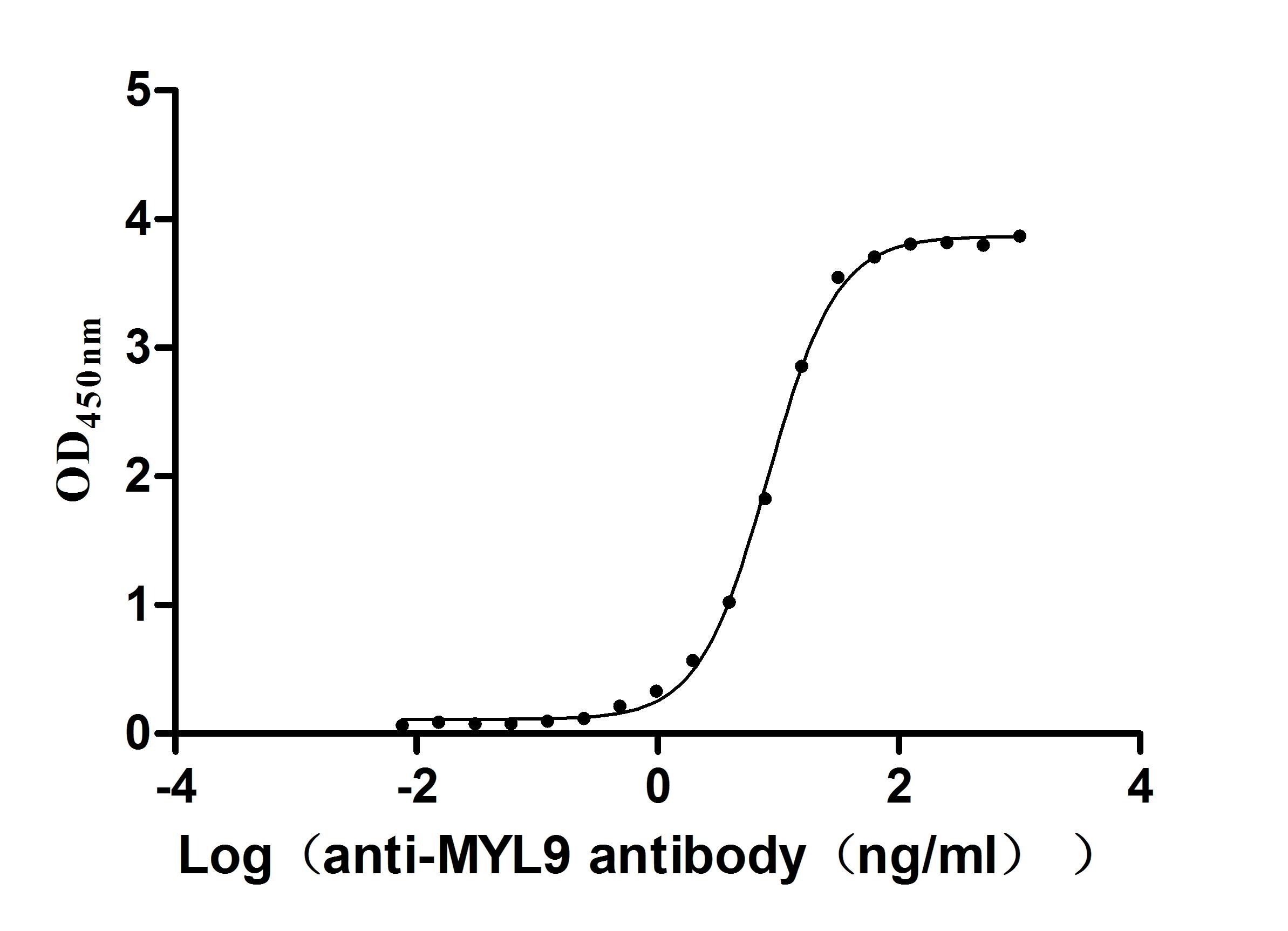
Recombinant Human Myosin regulatory light chain 12B (MYL12B) (Active)
Express system: E.coli
Species: Homo sapiens (Human)
-
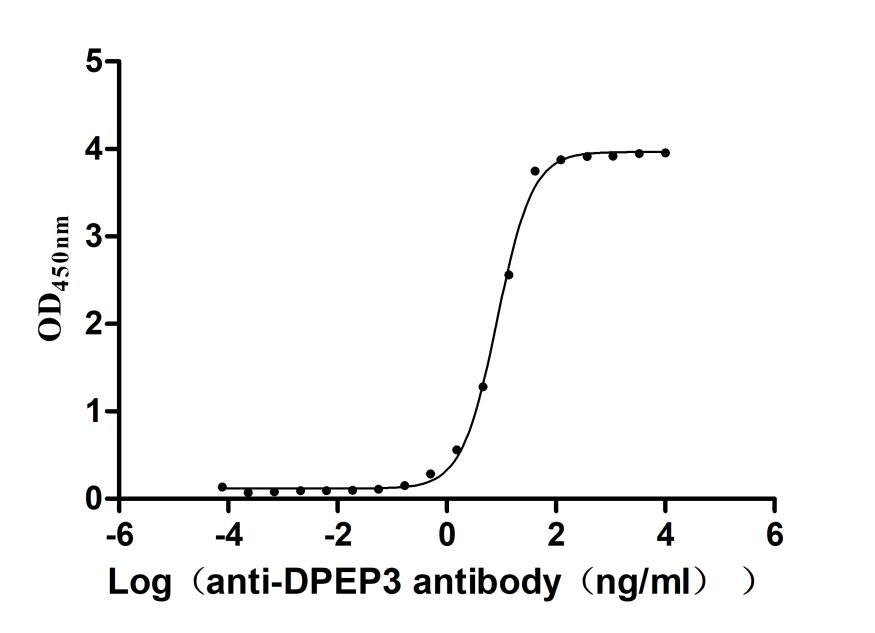
Recombinant Macaca fascicularis Dipeptidase 3(DPEP3) (Active)
Express system: Mammalian cell
Species: Macaca fascicularis (Crab-eating macaque) (Cynomolgus monkey)
-
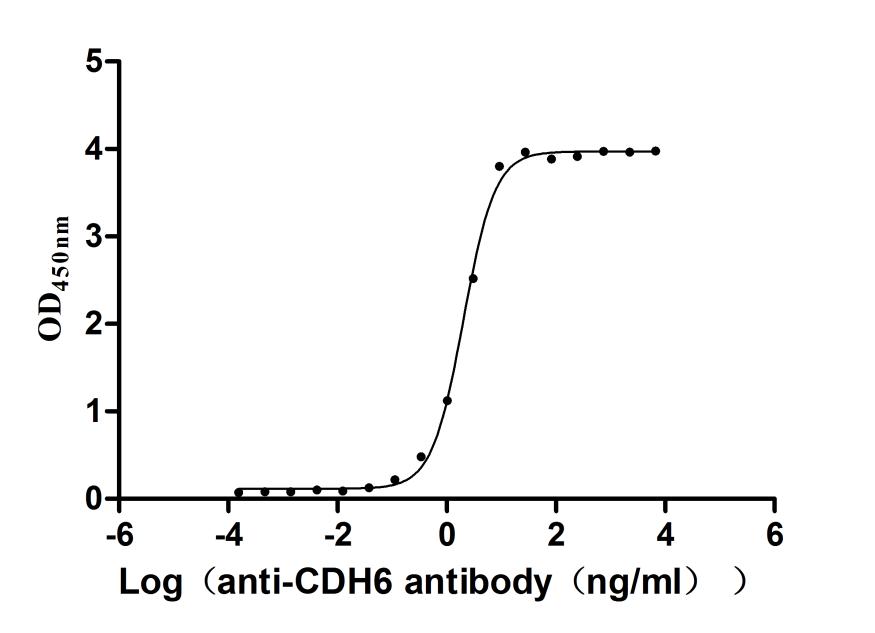
Recombinant Mouse Cadherin-6 (Cdh6), partial (Active)
Express system: Mammalian cell
Species: Mus musculus (Mouse)