Recombinant Human IgG receptor FcRn large subunit p51 (FCGRT), partial
Unavailable-
中文名稱:人FCGRT重組蛋白
-
品名簡稱:Recombinant Human FCGRT protein, partial
-
貨號:CSB-MP008545HU
-
說明書:
-
規格:¥2640
-
圖片:
-
 (Tris-Glycine gel) Discontinuous SDS-PAGE (reduced) with 5% enrichment gel and 15% separation gel.
-
-
其他:
產品詳情
-
純度:Greater than 90% as determined by SDS-PAGE.
-
基因名:
-
Uniprot No.:
-
別名:Alpha chain; Fc fragment of IgG; receptor transporter; alpha; FCGRN_HUMAN; FCGRT; FcRn alpha chain; FcRn; FCRN; alpha chain; IgG Fc fragment receptor transporter alpha chain; IgG Gc receptor; IgG receptor FcRn large subunit p51; IgG receptor FcRn large subunit p51 precursor; Immunoglobulin receptor; intestinal; heavy chain; Neonatal Fc receptor
-
種屬:Homo sapiens (Human)
-
蛋白長度:Extracellular Domain
-
來源:Mammalian cell
-
分子量:34.4kDa
-
表達區域:24-297aa
-
氨基酸序列AESHLSLLYHLTAVSSPAPGTPAFWVSGWLGPQQYLSYNSLRGEAEPCGAWVWENQVSWYWEKETTDLRIKEKLFLEAFKALGGKGPYTLQGLLGCELGPDNTSVPTAKFALNGEEFMNFDLKQGTWGGDWPEALAISQRWQQQDKAANKELTFLLFSCPHRLREHLERGRGNLEWKEPPSMRLKARPSSPGFSVLTCSAFSFYPPELQLRFLRNGLAAGTGQGDFGPNSDGSFHASSSLTVKSGDEHHYCCIVQHAGLAQPLRVELESPAKSS
Note: The complete sequence may include tag sequence, target protein sequence, linker sequence and extra sequence that is translated with the protein sequence for the purpose(s) of secretion, stability, solubility, etc.
If the exact amino acid sequence of this recombinant protein is critical to your application, please explicitly request the full and complete sequence of this protein before ordering. -
蛋白標簽:N-terminal 6xHis-tagged
-
產品提供形式:Liquid or Lyophilized powder
Note: We will preferentially ship the format that we have in stock, however, if you have any special requirement for the format, please remark your requirement when placing the order, we will prepare according to your demand. -
緩沖液:If the delivery form is liquid, the default storage buffer is Tris/PBS-based buffer, 5%-50% glycerol.
Note: If you have any special requirement for the glycerol content, please remark when you place the order.
If the delivery form is lyophilized powder, the buffer before lyophilization is Tris/PBS-based buffer, 6% Trehalose. -
儲存條件:Store at -20°C/-80°C upon receipt, aliquoting is necessary for mutiple use. Avoid repeated freeze-thaw cycles.
-
保質期:The shelf life is related to many factors, storage state, buffer ingredients, storage temperature and the stability of the protein itself.
Generally, the shelf life of liquid form is 6 months at -20°C/-80°C. The shelf life of lyophilized form is 12 months at -20°C/-80°C. -
貨期:3-7 business days
-
注意事項:Repeated freezing and thawing is not recommended. Store working aliquots at 4°C for up to one week.
-
Datasheet & COA:Please contact us to get it.
產品評價

相關產品
靶點詳情
-
功能:Cell surface receptor that transfers passive humoral immunity from the mother to the newborn. Binds to the Fc region of monomeric immunoglobulin gamma and mediates its selective uptake from milk. IgG in the milk is bound at the apical surface of the intestinal epithelium. The resultant FcRn-IgG complexes are transcytosed across the intestinal epithelium and IgG is released from FcRn into blood or tissue fluids. Throughout life, contributes to effective humoral immunity by recycling IgG and extending its half-life in the circulation. Mechanistically, monomeric IgG binding to FcRn in acidic endosomes of endothelial and hematopoietic cells recycles IgG to the cell surface where it is released into the circulation. In addition of IgG, regulates homeostasis of the other most abundant circulating protein albumin/ALB.; (Microbial infection) Acts as an uncoating receptor for a panel of echoviruses including Echovirus 5, 6, 7, 9, 11, 13, 25 and 29.
-
基因功能參考文獻:
- As expected, recombinant factor IX (without albumin fusion) and an FcRn interaction-defective albumin variant localized to the lysosomal compartments of both FcRn-expressing and nonexpressing cells. These results indicate that FcRn-mediated recycling via the albumin moiety is a mechanism for the half-life extension of rIX-FP observed in clinical studies. PMID: 29523681
- Regulation of the Human Fc-Neonatal Receptor alpha-Chain Gene FCGRT by MicroRNA-3181. PMID: 29302759
- we have demonstrated that loss of FcRn expression promotes tumor cell growth and proliferation. Our data support a model in which FcRn-mediated recycling of albumin reduces amino acid availability to fuel metabolic pathways. PMID: 27974681
- An arginine-to-histidine replacement at residue 435 in the binding domain of IgG3 to FcRn increases the transplacental transfer and half-life of malaria-specific IgG3 in young infants and is associated with reduced risk of clinical malaria during infancy. PMID: 28991911
- these findings establish a novel mechanism of humoral protection in the eye involving FcRn and may facilitate vaccine and therapeutic development for other ocular surface diseases PMID: 28760885
- Data suggest that, unlike albumin with low FcRn-binding affinity, albumin with high FcRn-binding affinity (due to genetic variation/genetic engineering) is directed less to lysosomes and more to endosomes, suggestive of FcRn-directed albumin salvage from lysosomal degradation. (FcRn = neonatal Fc receptor) PMID: 28637874
- the localization of FcRn alpha-chain in fixed nasal tissue, was studied. PMID: 26634928
- FcRn is involved in transport of aflibercept through REC in vitro. PMID: 27836572
- this study shows that FcRn may be associated with the transport and metabolism of IgG in thyrocytes and that transport is independent of IgG type, and that FcRn may be involved in Hashimoto's thyroiditis pathogenesis PMID: 28081504
- This review summarizes the main findings on Fc Receptor neonatal biology, function and distribution throughout different tissues. PMID: 27016466
- The results suggest that regardless of hyperglycemia degree, it decreases FcRn expression in placenta and blood cells and compromises the production and transfer of antibodies from maternal blood to newborns. PMID: 27469170
- Data indicate improved pharmacokinetics through enhanced neonatal Fc receptor (FcRn) interactions were apparent for a complementarity-determining region (CDR) charge-patch normalized monoclonal antibody (mAb) which was affected by non-specific clearance. PMID: 26337808
- analysis of binding motifs in the hFCGRT promoter that interact with their corresponding (Sp1, Sp2, Sp3, c-Fos, c-Jun, YY1, and C/EBPbeta or C/EBPdelta) transcription factors (TFs) suggests their involvement in regulation of human FCGRT gene expression PMID: 26252948
- These data indicate that human FcRn facilitates the transepithelial transport of IgE in the form of IgG anti-IgE/IgE ICs. PMID: 25652137
- Critical Role of the Neonatal Fc Receptor (FcRn) in the Pathogenic Action of Antimitochondrial Autoantibodies Synergizing with Anti-desmoglein Autoantibodies in Pemphigus Vulgaris. PMID: 26260795
- FcRn binding activity of a large set of Fc-fusion samples after thermal stress, was investigated. PMID: 26254986
- The neonatal Fc receptor (FcRn) binds independently to both sites of the IgG homodimer with identical affinity. PMID: 25658443
- These results suggest that hFcRn Tgm are a valuable and useful tool for pharmacokinetic screening of mAbs and Fc-fusion proteins in the preclinical stage. PMID: 25030041
- The extents of IgG expression in 86 lung cancers were found to associate with clinical stage, pathological grade and lymph node metastasis. PMID: 24853685
- Molecular dynamic simulations of human FcRn-Fc binding structures proposed that the protein-protein binding interface is composed of three subsites. PMID: 24057047
- This mAb panel provides a powerful resource for probing the biology of human FcRn and for the evaluation of therapeutic FcRn blockade strategies. PMID: 22453095
- domain I and III of albumin required for optimal pH-dependent binding to the neonatal Fc receptor PMID: 25344603
- Characterization and screening of IgG binding to the neonatal Fc receptor. PMID: 24802048
- In intestine, there was an increasing proximal-distal gradient of mucosal FcRn mRNA and protein expression. PMID: 24072267
- A cluster of conserved tryptophan residues of FcRn is required for binding to albumin and anti-FcRn albumin blocking antibodies. PMID: 24764301
- Extending serum half-life of albumin by engineering neonatal Fc receptor (FcRn) binding. PMID: 24652290
- The Neonatal Fc receptor (FcRn) enhances human immunodeficiency virus type 1 (HIV-1) transcytosis across epithelial cells. PMID: 24278022
- analysis of neonatal Fc receptor-based recycling mechanisms through identification of the human Fc interaction with human FcRn PMID: 24469444
- FcRn has the potential to interact with IgG-Fc domains in the ciliary epithelium and retinal and choroidal vasculature, which might affect the half-life and distribution of intravitreally injected Fc-carrying molecules. PMID: 24550358
- Only the unbound receptor or FcRn bound to monomeric IgG is sorted into recycling tubules emerging from early endosomes. PMID: 23741050
- Analytical FcRn chromatography allows differentiation of IgG samples and variants by peak pattern and retention time profile. PMID: 23765230
- The FCGRT promoter VNTR may influence mAbs' distribution in the body. CNV of FCGRT cannot be used as a relevant pharmacogenetic marker because of its low frequency. PMID: 23751752
- Studies indicate that high levels of endogenous IgG can compete with the monoclonal antibodies (mAbs) for binding to the neonatal Fc receptor (FcRn). PMID: 23917469
- Data indicate that Fc-neonatal Fc receptor (FcRn) interaction is pH dependent. PMID: 23384837
- Human FcRn was visualized in epithelial cells of Tg276 mice, but low serum hIgG levels were obtained PMID: 23220220
- genetic polymorphism is associated with the efficiency of Ig replacement therapy in common variable immunodeficiency PMID: 23286945
- Serum half-life of IgG is controlled by the neonatal Fc receptor (FcRn) that interacts with the IgG Fc region and may be increased or decreased as a function of altered FcRn binding. PMID: 22570488
- Structure-based mutagenesis reveals the albumin-binding site of the neonatal Fc receptor PMID: 22215085
- FcRn transgene blockade is a primary contributing factor toward reduction in arthritis severity; engineering of antibody Fc regions to generate potent FcRn blockers holds promise for the therapy of antibody-mediated autoimmunity in experimental arthritis. PMID: 21690327
- Thirty-three genetic variations of FCGRT, including 17 novel ones, were found. PMID: 20930418
- These studies demonstrate that FcRn-mediated transport is a mechanism by which IgG can act locally in the female genital tract in immune surveillance and in host defense against sexually transmitted diseases. PMID: 21368166
- Methionine (Met) oxidation can result in a significant reduction of the serum circulation half-life and the magnitude of the change correlates well with the extent of Met oxidation and changes in FcRn binding affinities. PMID: 21256596
- promoter polymorphism is not associted with the rate of maternal-fetal IgG transfer PMID: 20452034
- the x-ray crystal structure of a representative monomeric peptide in complex with human FcRn PMID: 20592032
- influence of FcRn expression on disease phenotype and the catabolism of therapeutically administered intravenous immunoglobulins in 28 patients with common variable immunodeficiency PMID: 20627700
- No binding of albumin was observed at physiological pH to neonatal Fc receptor. At acidic pH, a 100-fold difference in binding affinity was observed. PMID: 20018855
- A recombinant truncated HSA variant, HSA(Bartin), does not interact with FcRn, which gives a molecular explanation for the low serum levels. PMID: 20006594
- Affinities to FcRn of clinically used therapeutic proteins are closely correlated with the serum half-lives reported from clinical studies, and suggest an important role of FcRn in regulating the serum half-lives of the therapeutic proteins. PMID: 20083659
- Human FcRn binds selectively to human, rabbit and guinea pig IgG but not significantly to rat, bovine, sheep or mouse IgG (except for weak binding to mouse IgG2b). PMID: 11717196
- Assembly of the FcRn alpha-chain with beta(2)microglobulin is important for both transport of FcRn from the ER to the cell surface and efficient pH-dependent IgG binding. PMID: 12006623
顯示更多
收起更多
-
亞細胞定位:Cell membrane; Single-pass type I membrane protein. Endosome membrane.
-
蛋白家族:Immunoglobulin superfamily
-
組織特異性:Expressed in full-term placenta, heart, lung, liver, muscle, kidney, pancreas, and both fetal and adult small intestine.
-
數據庫鏈接:
Most popular with customers
-
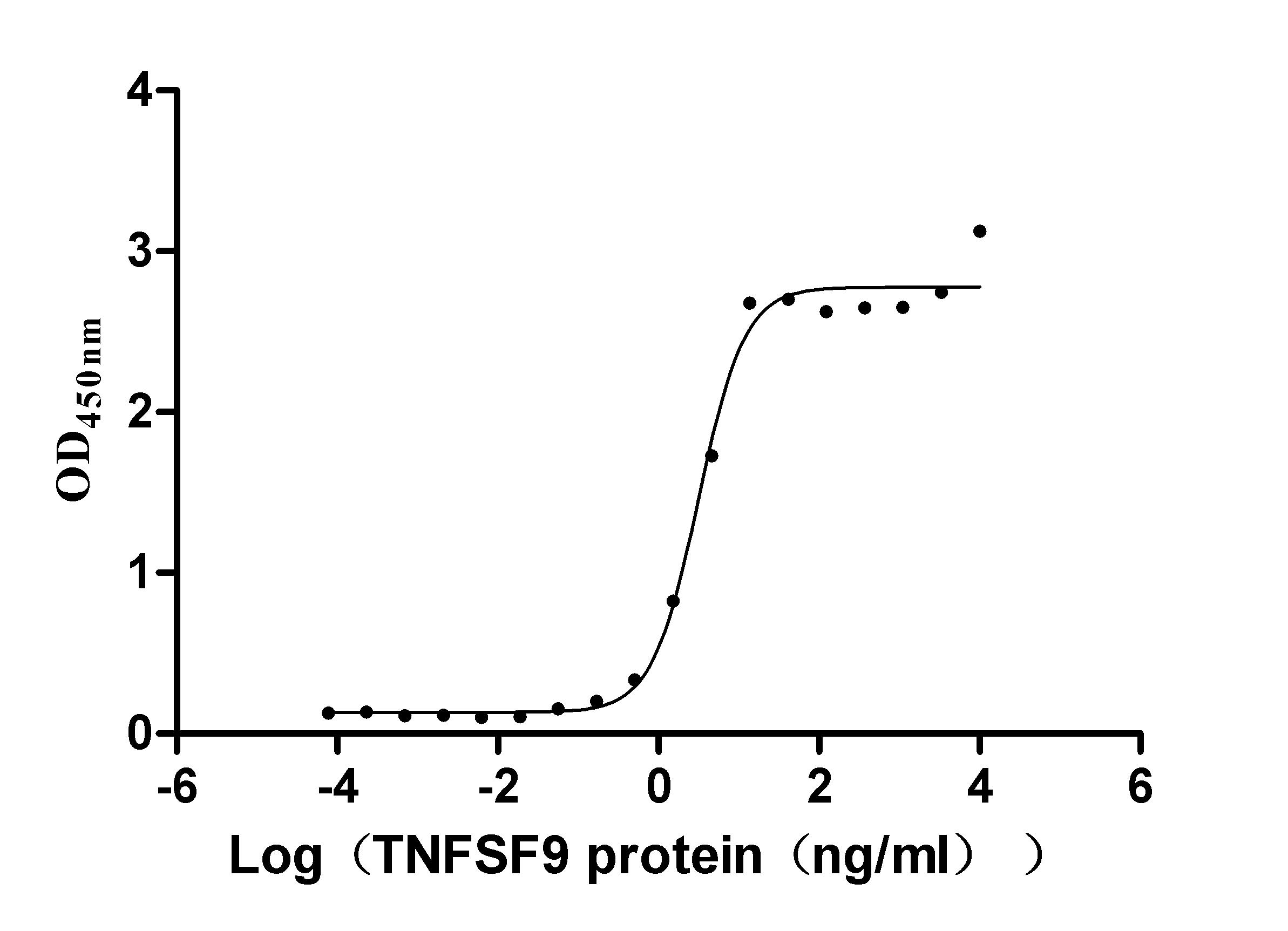
Recombinant Human Tumor necrosis factor ligand superfamily member 9 (TNFSF9), partial (Active)
Express system: Mammalian cell
Species: Homo sapiens (Human)
-
-AC1.jpg)
Recombinant Human Microtubule-associated protein tau (MAPT) (Active)
Express system: Mammalian cell
Species: Homo sapiens (Human)
-
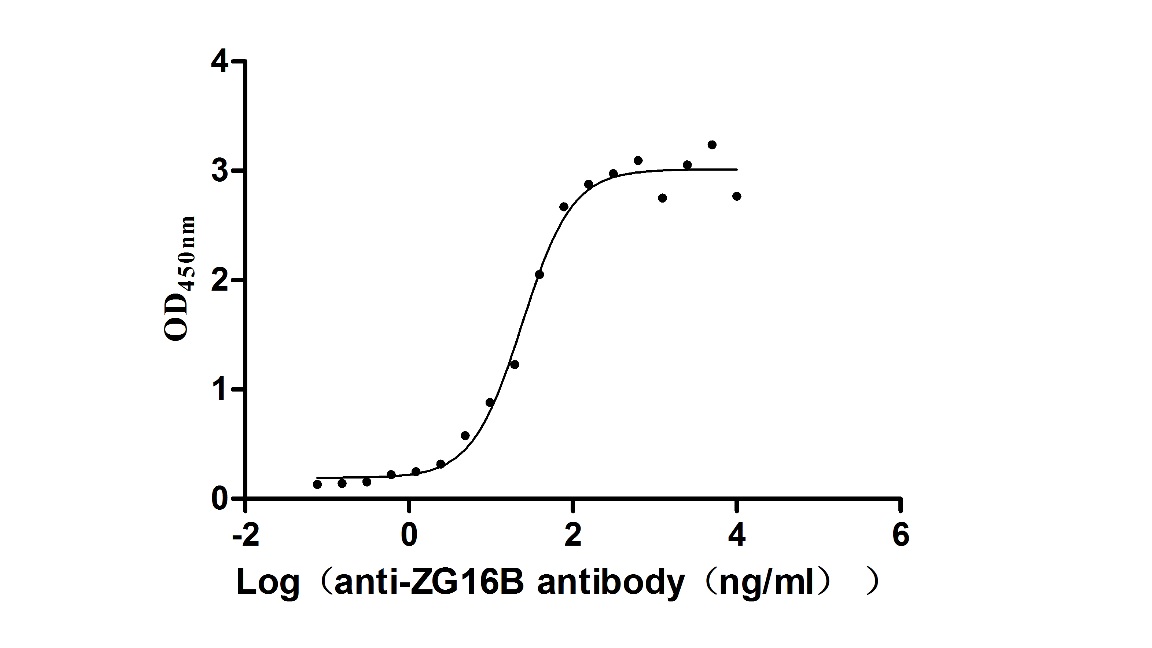
Recombinant Macaca fascicularis zymogen granule protein 16 homolog B (ZG16B) (Active)
Express system: Mammalian cell
Species: Macaca fascicularis (Crab-eating macaque) (Cynomolgus monkey)
-
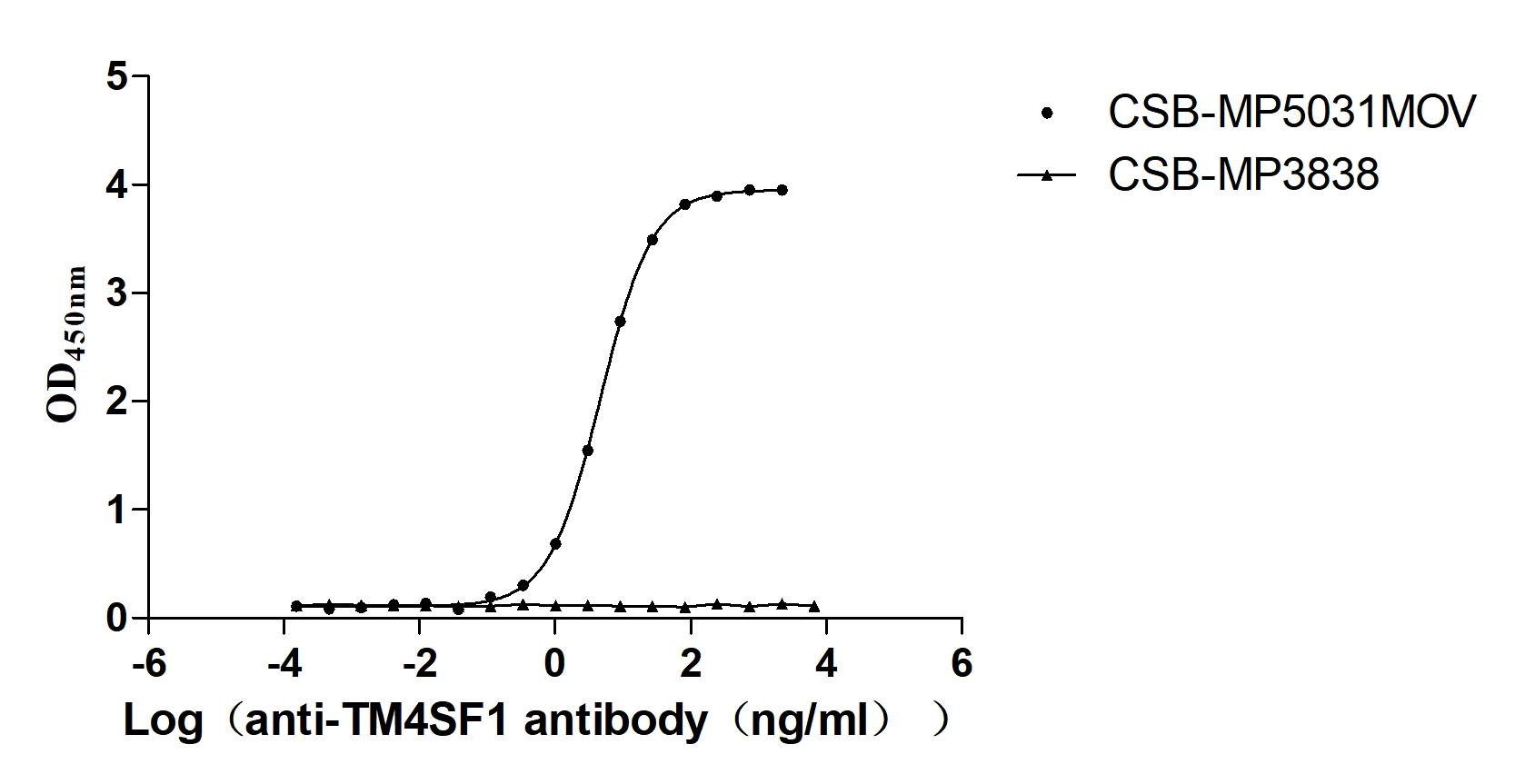
Recombinant Macaca fascicularis Transmembrane 4 L6 family member 1 (TM4SF1)-VLPs (Active)
Express system: Mammalian cell
Species: Macaca fascicularis (Crab-eating macaque) (Cynomolgus monkey)